Cluber
Research
Branding
Prototyping
Project
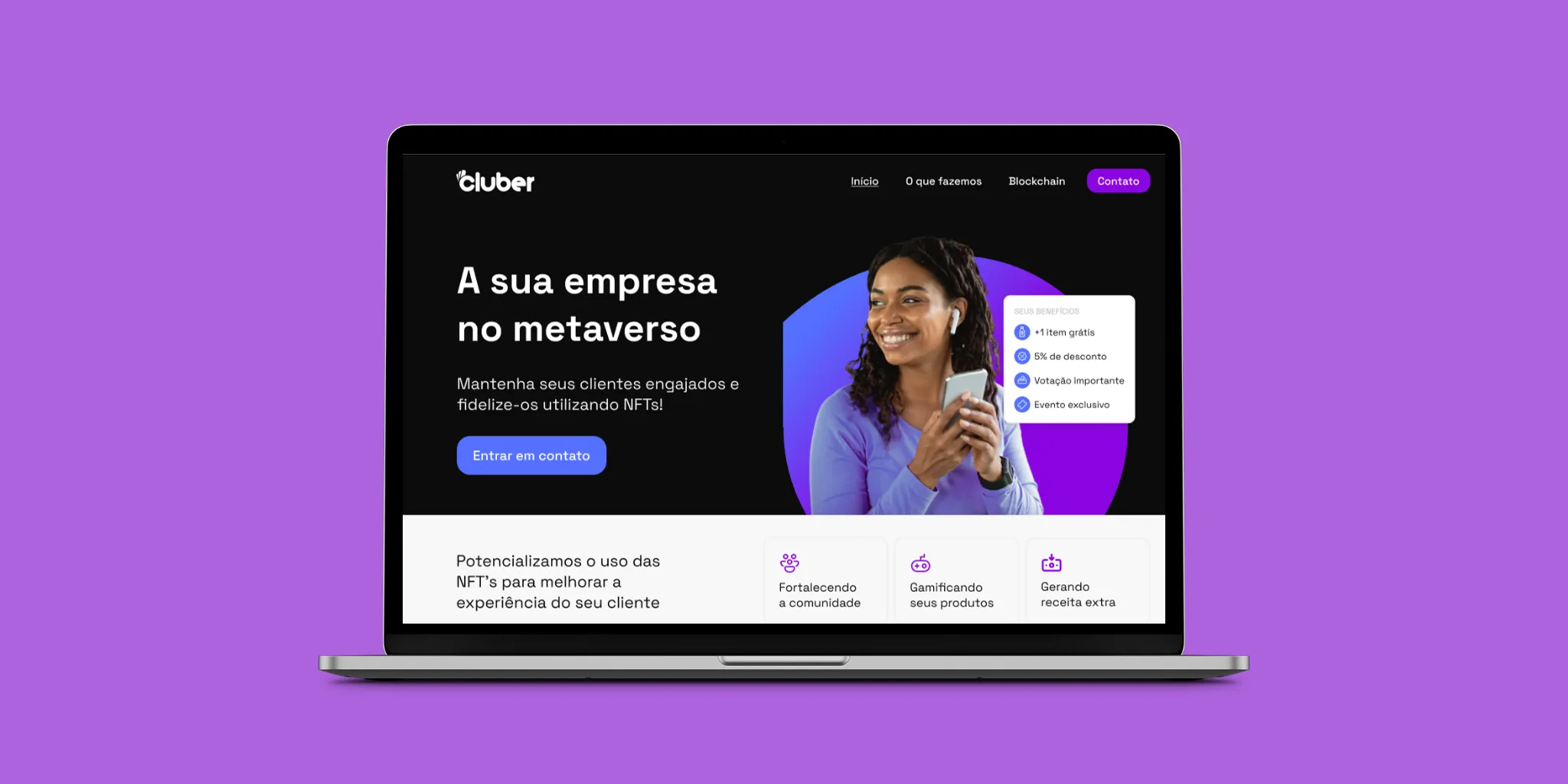
Designing a white-label NFT marketplace that helps restaurants increase customer loyalty through exclusive digital memberships.
Challenge
Create a marketplace that makes blockchain benefits understandable to everyday customers while allowing restaurants to launch branded NFT loyalty programs.
Research insights
We interviewed 20 participants to understand dining habits, blockchain awareness, and willingness to adopt NFT-based loyalty programs.
60%
Visit bars or restaurants 2–4 times per month, making recurring rewards attractive.
50%
Had little or no understanding of blockchain or NFTs.
90%
Would purchase an NFT if it unlocked meaningful discounts and exclusive experiences.
Personas
| Persona | Profession | Needs |
|---|---|---|
| John | Tech enthusiast | Regular bar visitor Wants exclusive perks Doesn't want blockchain complexity |
| Amanda | Restaurant owner | Wants repeat customers Needs new loyalty strategies Looks for simple business tools |
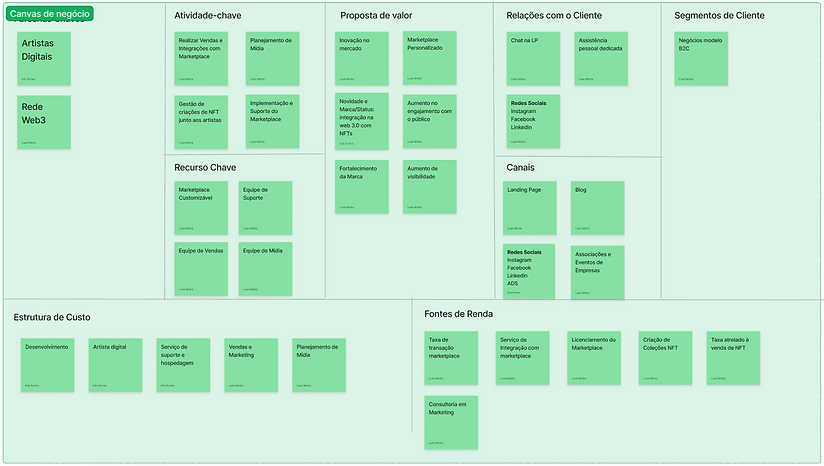
Business Model Canvas
We mapped the business model to validate the value proposition, customer segments, and revenue opportunities before designing the product.
Sitemap
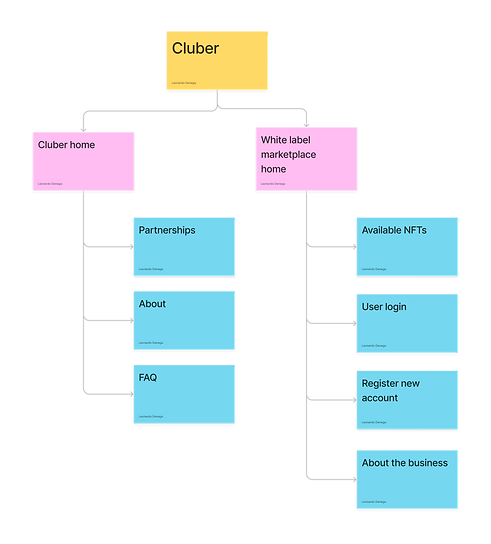
We designed two journeys tailored to each audience.
Customers
Buy and manage NFT memberships.
Business owners
Learn about the platform and launch branded marketplaces.
Objective
Educate restaurant owners about the platform while reducing uncertainty around blockchain and NFT adoption.
- Simplified blockchain language
- FAQ addressing common concerns
- Clear conversion path to request a marketplace
Wireframing
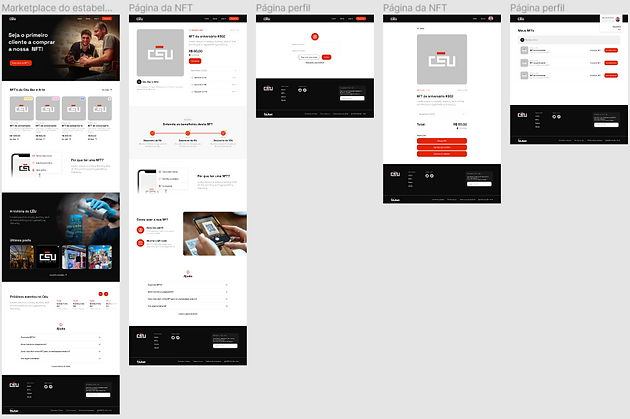
Early wireframes focused on simplifying the NFT purchase flow and reducing friction caused by blockchain-specific interactions.
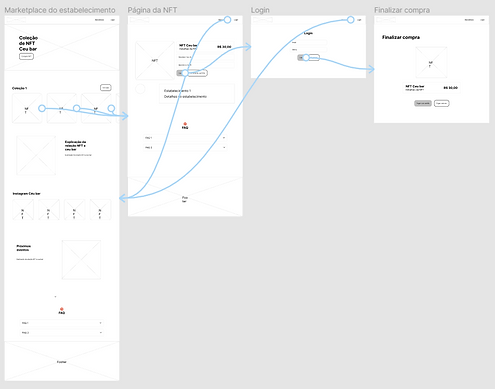
White label webpages
Design Decisions
- Flexible branding through interchangeable colors and assets
- Shared UI components across all marketplaces
- Consistent purchasing flow regardless of brand
Visual identity
The visual identity combines technology with community through gradients, modern typography, and a flexible brand system that adapts to different restaurant identities.
📲
Incorporating primary colors that resonate with technology.
🔤
Opting for a sans-serif font to maintain a consistent tone.
Key Takeaways

20 user interviews
Validated user behavior before defining the solution.

White-label architecture
Enabled multiple restaurant brands to launch consistent marketplaces with minimal customization.
Simplified Web3 onboarding
Reduced blockchain complexity by introducing NFTs through familiar loyalty concepts instead of technical terminology.
Final Considerations
Designing for blockchain required translating a complex technology into familiar user experiences. The project reinforced the importance of reducing cognitive load before introducing new concepts, proving that adoption depends more on clarity than on technology itself.